



SUDDENLY , THE DEAFENING LULL after the storm.
It was only a little more than thirty days ago when all the media hype and the whole shebang of press statements abound , with much ado about the so-called Zabosu Project which launched an Internet-based worldwide campaign crowdsourcing funds for some $100,000 at least --- to kickstart the launch of having "remote-controlled humans" via 4G technology.
It was only a little more than thirty days ago when all the media hype and the whole shebang of press statements abound , with much ado about the so-called Zabosu Project which launched an Internet-based worldwide campaign crowdsourcing funds for some $100,000 at least --- to kickstart the launch of having "remote-controlled humans" via 4G technology.
Technoprogressive enthusiasts and kibitzers are wondering about the silence after all the bubbly media hype for Zabosu via its Kickstarter campaign for the project, "a mobile marketplace for remote-controlled humans" -- and the buzz seemed to have mellowed recently as enthusiasts look for clues if it is going boom, bust, or pffffft.
This may be the second time that Karl Lautman, CEO and creator of the Zabosu project will be shelving the idea due to lack of funding: after grinning and bearing it through all the avalanche of flak from all directions. From the Kickstarter website, the project ,after its July 19 deadline, had a very poor finish : only a total of 31 backers and some $2985 pledges for funding, which finally made the project succumb to shelving.
When it was cancelled the first time early this year, Lautman said that (the organizers) " had a choice between participating and trying to leverage sufficient PR from it to support our Kickstarter, or passing on it in order to devote an appropriate amount of time to a formal PR campaign ... When it became obvious that the pitch-off would not offer sufficient leverage, Zabosu cancelled its Kickstarter to regroup around a proper PR campaign."
Everbody is now mum about the project apparently shelved for the meantime: Lautman , Kickstarter ( which helped promote Lautman's idea now has no promotions at the moment), and even the few backers who may have initially pledged their "interest" about the proJect.
Earlier, the Zabosu proponents were all perky, bubbly and bright-eyed with what could be a "breakthrough" ( many disagree with this) from the doldrums of the TaskRabbit low-tech idea of having another person do
your task for you: whether it be buying a present for a loved one,
attending a conference at the other part of the world, or doing
some supermarket buying chores.
your task for you: whether it be buying a present for a loved one,
attending a conference at the other part of the world, or doing
some supermarket buying chores.
“The inspiration for Zabosu came from Justin.tv, a web show in 2007 that followed Justin Kan as he roamed San Francisco with a backpack full of cellular data modems livestreaming audio and video of his life, pretty much 24/7,” says Lautman. “At that time, I thought how much more interesting it would be if viewers could talk back to Justin and tell him what to do, but the technology just wasn’t there yet. When I finally saw 4G cellular networks on the horizon, which are capable of the requisite 1 Mbps upload speed, I began development of Zabosu in earnest.”
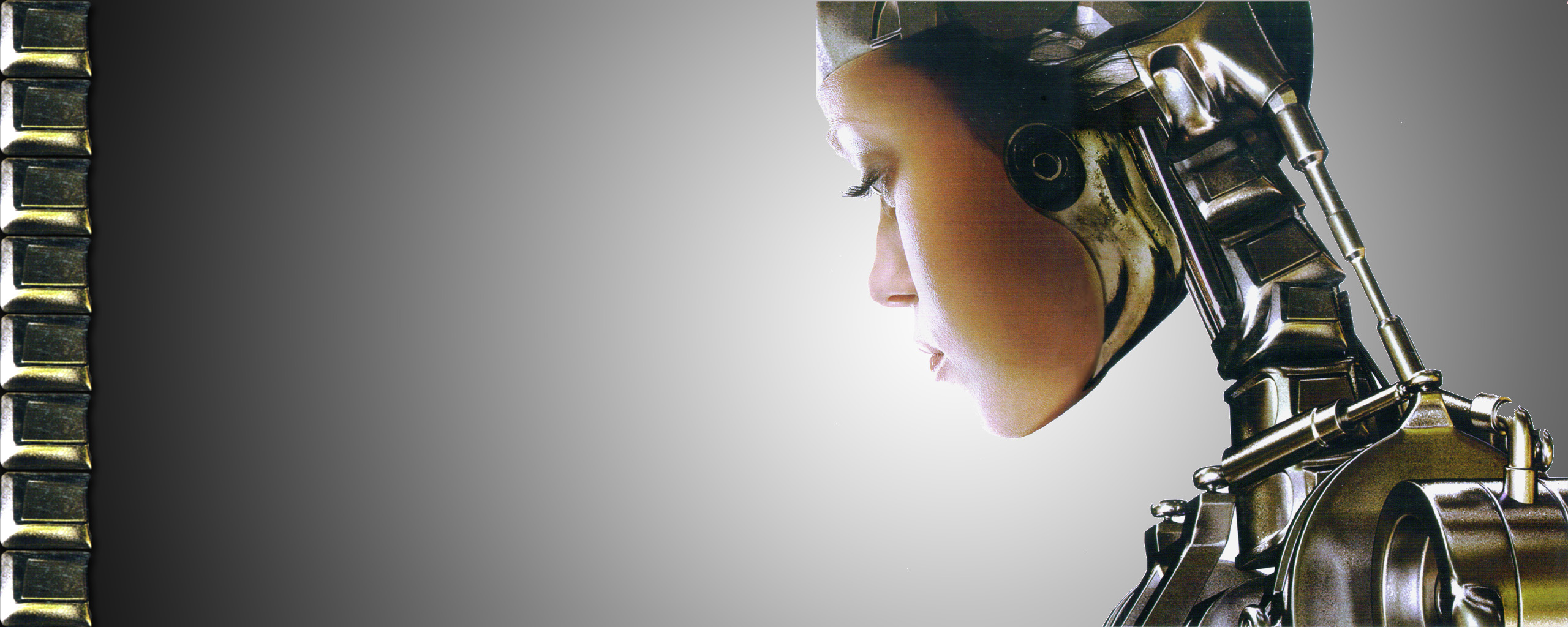
Truth is , there are no "remote-controlled humans" per se in this project, no androids, no cyborgs, no computer-to-brain interface "dictating" the subordinate on what to do, no Stepford Wife fembots, no telepresence avatars. The said phrase could possibly be Lautman's idea to spice up the hype for some "controversial flavor", catching the attention of the tech intelligentsia community.
Simplified: It's more like Skype-to-Skype between boss (the so-called "zab") and the subordinate (the so-called "zuk") , and the "zab" giving directions from the office/home, while the "zuk" is out on field doing the task for the "boss" --- all these with a tweak customized for the Zabosu project.
The Zabosu marketing blitz transcended what was thought of as a creepy idea on having "remote-controlled humans": what with its come-hither allure for the easy-to-impress EveryMan . Hear this:
"Hi, Kickstarter! Zabosu’s developed an incredible, almost magical service that lets one person actually take control of another person, anywhere in the world there’s a 4G cellular signal. It’s not quite as crazy as it sounds. The person being controlled, who we call an “Actor,” starts our app and sticks their phone in a pocket (or on a lanyard) with the camera facing out to stream live audio and video of their surroundings."
"The person controlling them, who we call a “Director,” connects to the stream with a web browser to see and hear everything going on around the Actor, from the Actor’s point of view. The Director also speaks to the Actor using the computer’s microphone and the Actor’s earpiece. Because the Director is paying the Actor, the Actor does what the Director tells them to do. The intention, in most applications, is to make the Actor a human extension, or projection, of the Director into whatever environment the Actor happens to be in."
 Zabosu Actor Page
Zabosu App
Kickstarter further writes:
"Some of the things we imagine Zabosu being
used for are sightseeing, running errands, shopping,
virtual assistants, gaming, buying a home,
remote tradeshow attendance, and technical assistance.
There are also situations where you might want to
control multiple Actors simultaneously."
used for are sightseeing, running errands, shopping,
virtual assistants, gaming, buying a home,
remote tradeshow attendance, and technical assistance.
There are also situations where you might want to
control multiple Actors simultaneously."
"Let’s say you’re looking for a new office and there
are four candidate spaces. You could hire four Actors
and send one to each space, even at the same time,
to evaluate all the candidates in less time than it would
take you to visit even one. Maybe you’re not looking
for an office, though. Maybe it’s a wedding venue.
Or, a resort for the holidays. You could even assemble
an army of Actors and make a bid for world domination
(you'd fail, horribly, but you definitely could try)."
"These are just our ideas, though, and one of the
reasons we're using Kickstarter is to find out how others
might use Zabosu. In the survey that goes out at the end
of the campaign, we’ll be asking you what your plans
are for it, so we can better target it for people's
intended uses."
reasons we're using Kickstarter is to find out how others
might use Zabosu. In the survey that goes out at the end
of the campaign, we’ll be asking you what your plans
are for it, so we can better target it for people's
intended uses."

"The Zabosu web site will let Directors find and
schedule Actors based on relevant characteristics like
location, availability and skills. The site also archives
the videos, so Directors, Actors and others (we call
them “Viewers”) can watch them later."
schedule Actors based on relevant characteristics like
location, availability and skills. The site also archives
the videos, so Directors, Actors and others (we call
them “Viewers”) can watch them later."
"It’ll also let Actors (who are independent contractors
and not employed by Zabosu) create pages for themselves
describing where they’re based, what they’re willing to
do as an Actor, what they've specifically done for Directors,
and so on."
and not employed by Zabosu) create pages for themselves
describing where they’re based, what they’re willing to
do as an Actor, what they've specifically done for Directors,
and so on."
"ZabosuConnect, the phone app used by the Actor
(only Android 4.1 “Jelly Bean” and later at launch)
shows them where they are, where they’re supposed
to be, what they’re supposed to be doing, and other
handy stuff."
(only Android 4.1 “Jelly Bean” and later at launch)
shows them where they are, where they’re supposed
to be, what they’re supposed to be doing, and other
handy stuff."
"So, what does this have to do with Kickstarter? Well,
we’re super excited about enabling fun, valuable
and unprecedented human interactions, but just
because we think this stuff’s cool doesn't mean
enough other people will to make it a viable
business. That’s where you come in. If we hit our
funding goal, we’ll know we’re on to something
awesome and will keep working at it. The hardest
and riskiest parts are already done (the app is fully
functioning at this point).
What’s left is all stuff the team has done many
times before, so we believe we’ll be able to launch by
the end of the year."
we’re super excited about enabling fun, valuable
and unprecedented human interactions, but just
because we think this stuff’s cool doesn't mean
enough other people will to make it a viable
business. That’s where you come in. If we hit our
funding goal, we’ll know we’re on to something
awesome and will keep working at it. The hardest
and riskiest parts are already done (the app is fully
functioning at this point).
What’s left is all stuff the team has done many
times before, so we believe we’ll be able to launch by
the end of the year."

Karl Lautman, the main man at the helm of this project,
more popular with his background as a sculptor-visual
artist whose works have received some recognition,
could be just gathering his seond wind, or probably
"third wind" the next time he dishes out his ideas for the
public to ogle on.

Karl Lautman
His ideas may be bizarre or out-of-this-world, and he
may say that he is entitled to these conundrums of
eclectic trends of thought and sudden outbursts of
unorthodox perspectives. But he remains unperturbed
and may be hurling out more unconventional ideas
for the public -- and the subsequent superlatives
coming from all fronts as usual, may be an ordinary
occurrence for Lautman.
may say that he is entitled to these conundrums of
eclectic trends of thought and sudden outbursts of
unorthodox perspectives. But he remains unperturbed
and may be hurling out more unconventional ideas
for the public -- and the subsequent superlatives
coming from all fronts as usual, may be an ordinary
occurrence for Lautman.
Lautman writes his statement:
"The power and ubiquity of technology has bred
complacency among those who use it regularly
(i.e. virtually everyone in the developed world).
While most would agree that we should not place too
much faith in machines, in reality we can't help taking
for granted that the light will go on when we flip the switch,
the car will start when we turn the key, the plane won't
fall from the sky, .... Yet the capacity of machines
to misbehave is endless. In fact, it's their nature."
complacency among those who use it regularly
(i.e. virtually everyone in the developed world).
While most would agree that we should not place too
much faith in machines, in reality we can't help taking
for granted that the light will go on when we flip the switch,
the car will start when we turn the key, the plane won't
fall from the sky, .... Yet the capacity of machines
to misbehave is endless. In fact, it's their nature."
"I'm fascinated by this tension between what we want, and
expect, a machine to do, and what the machine "wants" to do.
I call it "machine tension," or just "McTension."
I explore McTension in my work by making things that behave
unexpectedly, though not strictly randomly. While the behavior
may be easier to infer for some of my machines than for others,
they all tend to have an unpredictable (or, at least,
difficult-to-predict) element to them."
expect, a machine to do, and what the machine "wants" to do.
I call it "machine tension," or just "McTension."
I explore McTension in my work by making things that behave
unexpectedly, though not strictly randomly. While the behavior
may be easier to infer for some of my machines than for others,
they all tend to have an unpredictable (or, at least,
difficult-to-predict) element to them."
"Whether it's calculating prime numbers on electromechanical
counters, causing falling dominoes to stand themselves up
again, or generating organized sequences of clicks on
a relay (but at random intervals), the effect is simultaneously
familiar and surprising.
Pseudo-randomness isn't difficult to achieve, but also isn't
very interesting, so I strive to make my work entertaining,
sometimes even whimsical, rather than impenetrable."
counters, causing falling dominoes to stand themselves up
again, or generating organized sequences of clicks on
a relay (but at random intervals), the effect is simultaneously
familiar and surprising.
Pseudo-randomness isn't difficult to achieve, but also isn't
very interesting, so I strive to make my work entertaining,
sometimes even whimsical, rather than impenetrable."


 j
j











 Posts
Posts


